display=swap" rel="stylesheet">
Growing process
Seed to Table

The 6-Stage Protocol

Every tray that leaves our facility follows the same rigorous 6-stage process — refined through thousands of production cycles to deliver consistent quality, yield, and food safety compliance.

Stage 01

Seed Selection & Quality Control

The production cycle begins with the seed — and we treat seed selection as the most critical quality decision we make. All seed is sourced from certified organic suppliers with documented germination rates of ≥95%. We maintain a 90-day seed inventory buffer and test each incoming lot before it enters production.

We reject any lot that tests below 92% germination — even if it means short-term supply constraints. Inconsistent germination creates uneven canopy, which fails our visual grading standards at harvest.

Seed Standards
Germination rate minimum≥95%
Certification requiredOrganic
Lot testingEvery incoming lot
Inventory buffer90-day minimum
Suppliers

We source exclusively from established North American seed suppliers with documented organic certification chains. Seed origin, lot number, and germination data are recorded in our traceability system for every production batch.

Stage 02

Soaking & Pre-Germination

Many varieties benefit from pre-soaking to initiate imbibition — the process by which seeds absorb water and activate the enzymatic machinery of germination. Larger seeds (sunflower, pea, sunflower) soak for 8–12 hours in RO-filtered water at room temperature. Mucilaginous seeds (basil, chia) are never soaked. Small brassica seeds generally do not require soaking but may benefit from a 4-hour soak to improve speed and uniformity.

No Soak Needed
Mustard, Radish, Arugula, Amaranth, Basil (mucilaginous — dry seed only)
4–6 Hour Soak
Broccoli, Red Cabbage, Kale, Kohlrabi, Beet, Swiss Chard
8–12 Hour Soak
Sunflower (BOSS), Pea Tendrils, Buckwheat, Corn, Fenugreek
Stages 03–04

Seeding & the Blackout Phase

Seeds are evenly distributed over food-grade 10"×20" trays containing our proprietary substrate blend — coco coir and perlite at a 70:30 ratio. This sterile, soil-free growing medium provides excellent water retention, aeration at the root zone, and eliminates the risk of soil-borne pathogens that compromise food safety.

Seeding density is variety-specific and calibrated to produce a uniform, dense canopy at harvest. Over-seeding causes etiolated, thin growth. Under-seeding wastes tray space. Our density targets have been refined through hundreds of production cycles for each variety.

Blackout Phase Science

During blackout, the hypocotyl elongates under etiolation — producing the tall, strong shoot structure that characterizes professional microgreens. Weighted cover trays provide uniform, gentle pressure that promotes straight, upright growth and prevents seed hull retention.
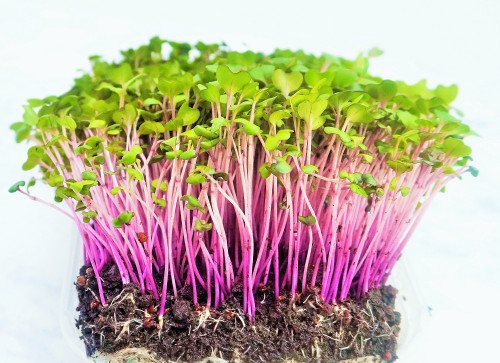
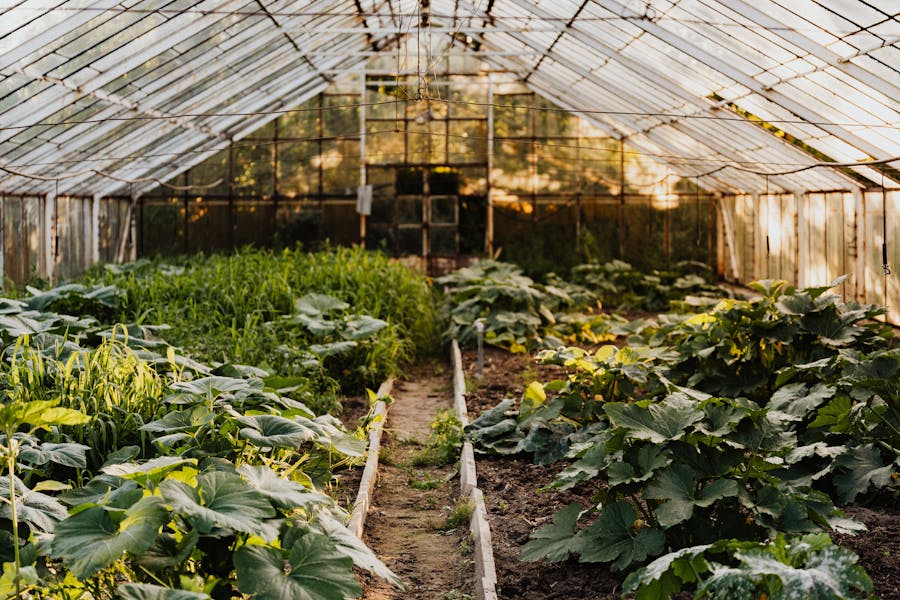
Microgreens in trays
Stage 05

Light Phase & Chlorophyll Development

After the blackout phase, trays are moved to our LED growing racks where photomorphogenesis begins. Within 12–24 hours, the pale yellow cotyledons turn bright green as chlorophyll synthesis accelerates. This is the most visually dramatic stage of production and the period when nutritional density climbs most rapidly.

Light Intensity
200–250
µmol/m²/s PPFD
Light Cycle
16/8
Hours on / off
Temperature
68–72°F
Continuous
CO₂
400–800
ppm maintained
Stage 06

Harvest, Grade & Cold Chain

The final stage is the most critical for quality. A microgreen harvested 24 hours too late has passed its nutritional and visual peak. Our harvest timing is based on daily visual inspection and variety-specific day-count targets.

Cut
Clean Blade Harvest

Stainless steel blades — cleaned and sanitized between each tray. Cut above the growing medium to prevent substrate contamination and root material in the product.

Grade
Visual Inspection

Every tray is visually graded before packaging. Uniform canopy color, target height, no yellowing, no tip burn. If a tray doesn't meet spec, it doesn't ship — period.

Cold
45-Minute Rule

Harvested product enters cold storage within 45 minutes of cutting. The packing room is maintained at 65°F with pre-cooled packaging. Temperature logs available per shipment.

Open a Wholesale Account →